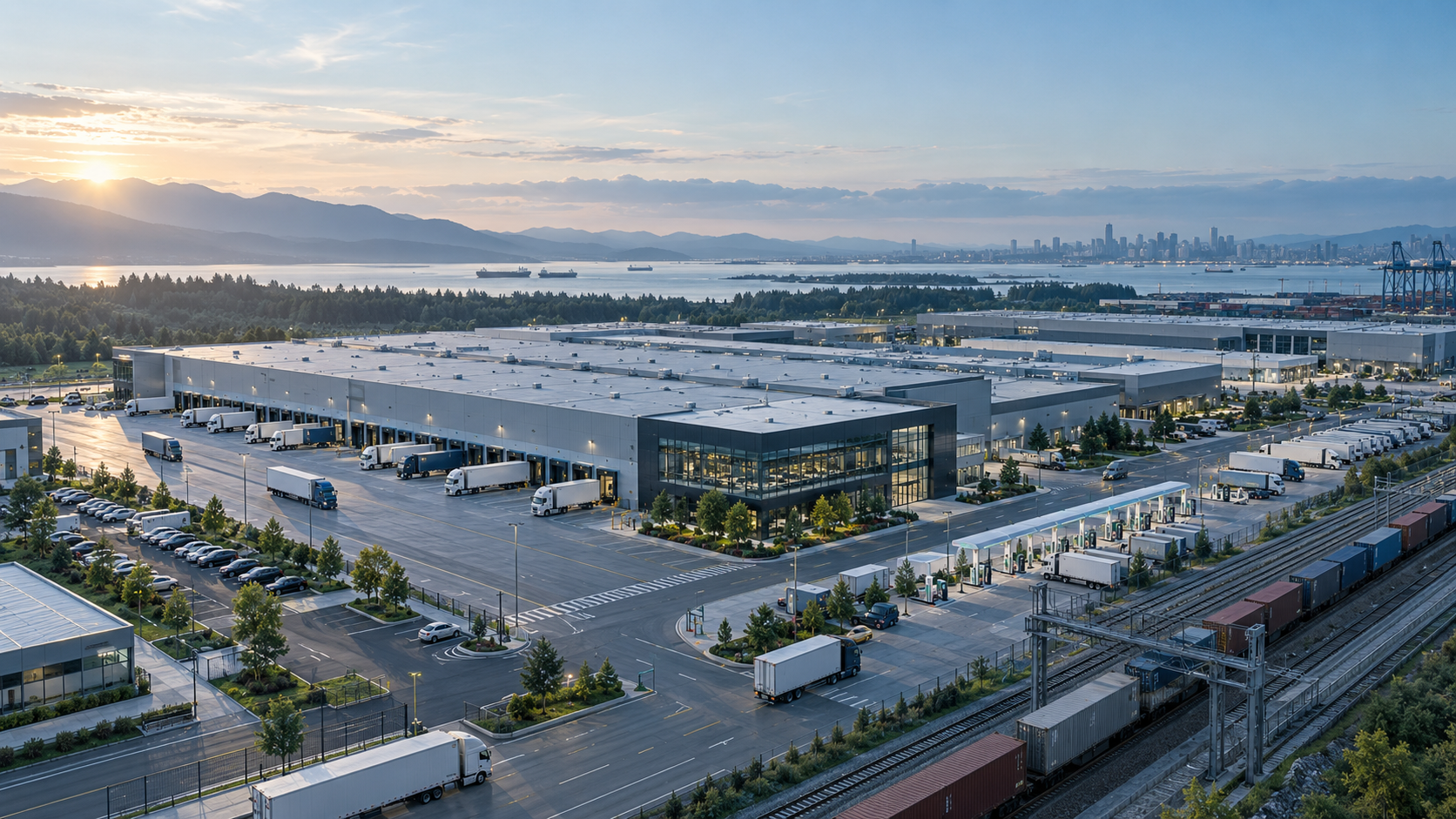
Every large enterprise operates industrial mobility infrastructure, whether or not it uses that name. In one market it may be fleet parking. In another, it may be a trailer yard, temporary staging near a distribution center, charging capacity for a growing fleet, or outdoor storage supporting a new operation. The infrastructure, the spending, and the operational dependency are all real.
What is often missing is a clear answer to a basic question: who owns it?
In many enterprises, the honest answer is that responsibility is shared widely but held by no one. Corporate real estate may own the lease, while fleet defines the vehicle requirement and operations decides where capacity is needed. Facilities may manage access, maintenance, and site readiness, and finance approves the spend and processes the invoices. Legal, procurement, security, sustainability, and local market leaders may all be involved as well. Each of these functions is necessary, but none can manage the full system alone. That gap in ownership is the central challenge of Enterprise Industrial Mobility Infrastructure.
The work already exists
Industrial Mobility Infrastructure (IMI) is the physical network that allows an enterprise to move people, vehicles, equipment, materials, and goods. It includes:
- Fleet and employee parking
- Trailer yards
- Staging and laydown capacity
- Industrial outdoor storage
- Charging depots
- Maintenance and service-support locations
- Overflow logistics capacity
- Temporary operating sites
- Last-mile mobility hubs
Enterprises rarely manage these locations together. More often, each one arrives as a separate requirement. A local operation needs parking for 75 vehicles, a fleet team needs charging capacity in a new market, or a distribution facility runs out of trailer space. A construction or utility program may need a laydown yard, and a seasonal surge may create a temporary staging requirement.
Each need reaches the organization through a different channel, such as an email, a spreadsheet, a broker request, an operating meeting, a capital plan, or an urgent call from the field. The requirement is eventually met, but the knowledge gained along the way usually stays with the function, system, or vendor that handled it. As a result, the next requirement starts largely from the beginning.
The enterprise is already doing this work. It has simply not treated that work as a single operating discipline.
Why no single function can own it alone
The ownership problem exists because IMI falls between established organizational structures, and each function sees only part of it.
Corporate real estate understands markets, leases, property risk, and transactions, but IMI requirements are defined less by property type than by the operational capability a location must provide. Fleet understands vehicles, utilization, routes, maintenance, and equipment, yet it may not control real estate procurement, lease administration, local permitting, or portfolio strategy. Operations understands urgency and service requirements, although local decisions do not always account for enterprise-wide cost, risk, utilization, or future capacity. Facilities understands how a location must perform once it is active, but it often joins the process after market and site decisions have already been made. Finance can see the spend, yet invoices rarely show whether capacity is used effectively, whether several agreements support the same requirement, or whether a higher-cost site protects a critical operating capability.
Every function holds part of the picture. The difficulty arises when each team is expected to optimize its own part without a shared operating record. Real estate optimizes lease economics, fleet optimizes vehicle availability, operations optimizes speed, finance optimizes budget, and facilities optimizes site performance. Each of those decisions can be sound within its own system and still produce a network that is expensive, reactive, and difficult to scale.
The cost of fragmented ownership is rising
This model was more manageable when infrastructure portfolios changed slowly. That is no longer the case.
CBRE estimates that more than 1.7 billion square feet of U.S. industrial leases will expire within the next 36 months, and nearly 67% of surveyed occupiers reported that more than a quarter of their leases will expire in that period. Each expiration can trigger a broader operating decision about whether to renew, relocate, consolidate, expand, electrify, or redesign the capability that site supports.
Those decisions are also taking longer. JLL reported that industrial occupier decision timelines grew from approximately 3.5 months to 11 months as organizations placed greater emphasis on efficiency, cost control, and supply-chain resilience. The underlying issue is not only that real estate transactions have slowed. Each decision now involves more functions, depends on more data, and carries greater operational consequences. A charging requirement is also a decision about power, real estate, fleet, finance, and utilization. A parking requirement involves capacity, access, security, cost, and route performance. A trailer yard affects throughput, labor, detention, land use, and network resilience.
When these decisions remain spread across separate teams and systems, growth creates what we call Infrastructure Debt: the cumulative operating cost that builds when physical infrastructure changes faster than the enterprise's ability to coordinate, govern, and optimize it.
Infrastructure Debt rarely appears as a single line on a financial statement. It is paid first in time, through longer searches, repeated market work, and delayed openings. It shows up as agreements whose expiration is discovered too late, capacity secured under pressure, and data rebuilt for every executive review. It also appears as underused sites in one market while another faces shortages, and as local solutions that cannot be replicated across the portfolio. This debt continues to grow even when every participating team performs its own role well.
More software does not create ownership
Enterprises have spent decades digitizing individual functions. Real estate has lease-administration and transaction systems, and fleet has telematics and maintenance platforms. Facilities relies on work-order and building-management systems, finance uses ERP and procurement tools, and operations runs transportation, warehouse, labor, and planning systems. These systems are important, and each was designed to make its function more effective. They were not designed to govern the physical infrastructure that sits between those functions.
IFMA has similarly identified fragmented, siloed data as a persistent problem in facilities management, noting that operators need more connected information across assets, spaces, systems, and people.
This distinction matters more as enterprises invest in AI. PwC found that 83% of operations leaders expect AI and automation to help break down traditional functional silos, yet only 27% reported having fully embedded an AI strategy across business units. AI can accelerate analysis, forecasting, sourcing, and decision support, but it also amplifies the operating model beneath it. If infrastructure data remains fragmented, AI makes disconnected decisions faster. If ownership remains unclear, automation increases activity without establishing accountability.
The enterprise does not need another isolated dashboard. It needs a shared system that clarifies how decisions move across functions and who remains accountable for the outcome.
One accountable program, not one department
The answer is not to move every IMI responsibility into corporate real estate, fleet, facilities, finance, or operations, and it is not to remove those teams from the process. Effective IMI management depends on their combined expertise. What needs to change is how that participation is organized: around a single enterprise program with:
- A shared definition of the infrastructure network
- A consistent operating record for every requirement and location
- Clear decision rights across functions
- Named responsibility for cost, capacity, utilization, and risk
- Repeatable workflows for planning, procurement, activation, and management
- Portfolio-level visibility across markets and infrastructure types
- Continuous measurement and optimization
The program owner does not need to execute every task personally. Ownership means ensuring the tasks connect. A broker may still identify supply, real estate may still negotiate the agreement, and fleet may still define equipment requirements. Operations may still validate the location, facilities may still manage readiness, and finance may still govern spend. The difference is that these actions take place within one coordinated system rather than as independent workflows. That is what separates having many stakeholders from having no owner.
From functional optimization to enterprise performance
Once IMI is managed as an enterprise program, the questions leaders ask begin to change. Instead of asking who found a site, the enterprise can ask why it needs the capacity and what operational outcome that capacity must support. Instead of asking what a lease costs, it can ask what it costs in total to deliver the capability and how effectively the capacity is being used. Instead of asking which team is responsible for a location, it can ask who owns the requirement, the agreement, day-to-day performance, and the next decision. And instead of searching for the right spreadsheet, it can rely on a shared enterprise operating record.
This is the shift from managing assets to managing capabilities. It allows the enterprise to see parking, charging, staging, storage, maintenance support, and temporary capacity as parts of one infrastructure network, so that every new requirement becomes an opportunity to strengthen that network rather than another isolated transaction.
So, who owns Industrial Mobility Infrastructure?
The owner should not be any one traditional department. It should be the enterprise, acting through a clearly governed program and supported by the functions already doing the work. Real estate, fleet, operations, facilities, finance, procurement, and local teams will continue to play essential roles. The goal is not to merge those roles but to give them a shared operating model, common data, and clear accountability.
Enterprises have relied on industrial mobility infrastructure for as long as they have moved vehicles, equipment, materials, and people. What has been missing is the discipline to manage it as one system. Naming that system is the first step, and assigning accountable program ownership is what makes it possible to operate.